
Ten of Wands Tarot Card Meaning
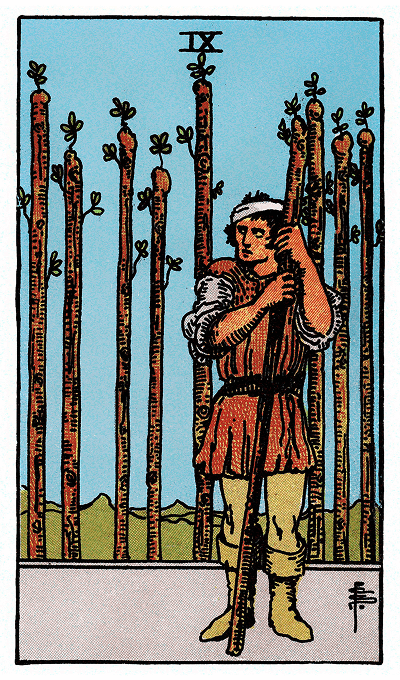
Table of Contents
Quick Keywords for Ten of Wands Card
Upright: Burden, responsibility, overwhelm, duty, hard work, perseverance, stress, carrying too much, commitment, struggle
Reversed: Releasing burdens, delegation, letting go, relief, setting boundaries, lightening the load, burned out, collapse, refusing help
Ten of Wands Card Symbolism and Visual Description
The Ten of Wands shows a figure hunched beneath the weight of ten long wooden staffs, creating one of the most visually striking images in the entire Minor Arcana. The person in the card carries all ten wands at once, their body bent forward with effort. You can almost feel the strain just looking at it. What catches my attention every time is how the figure seems determined to keep moving forward despite the obvious difficulty. There’s something both admirable and concerning about that posture.
The figure’s face is typically hidden or turned away from the viewer, obscured by the heavy bundle they’re carrying. This detail feels significant. Perhaps it suggests how burden can make us lose sight of our own identity, or how we become so focused on the weight we’re carrying that we forget to look up and see where we’re actually going. The anonymity of the figure also makes it universal. Anyone can see themselves in this card.
In the background, most traditional decks show a home or dwelling in the near distance. The destination is visible and close, which adds an interesting layer to the interpretation. The figure isn’t wandering aimlessly; they’re almost there. This proximity to completion can be both motivating and frustrating. You’re so close, yet the burden feels heaviest right before the finish line. I think many people can relate to that feeling of pushing through when you’re nearly done but completely exhausted.
The wands themselves are all roughly the same size and carried in a bundle, which creates a kind of chaotic arrangement. They’re not neatly organized or balanced. This visual chaos mirrors how responsibilities can pile up in our lives, one after another, until we’re holding more than we can comfortably manage. The fact that it’s ten wands, the maximum number in this suit, emphasizes the sense of culmination and perhaps excess.
The ground beneath the figure’s feet is often depicted as simple and unadorned, showing a straightforward path. There aren’t obstacles blocking the way forward, which is curious. The difficulty isn’t in the terrain but in what the person has chosen to carry. This symbolism invites reflection on self-imposed burdens versus external challenges. Sometimes the heaviest weight comes from what we refuse to put down.
The overall color palette in many versions of this card leans toward earthy tones with the brown of the wands dominating the image. There’s a certain dullness to it, a lack of the vibrant energy you might see in earlier Wands cards. The fiery, passionate suit of Wands has become weighed down by duty and obligation. That transformation from enthusiasm to exhaustion tells its own story about how even the things we’re passionate about can become burdensome when taken to an extreme.
Some decks show the figure wearing simple, practical clothing rather than anything elaborate or ceremonial. This reinforces the everyday quality of the card’s message. The Ten of Wands isn’t about mythical quests or dramatic challenges. It’s about the daily grind, the accumulation of responsibilities, and the very human struggle of trying to do everything ourselves.
Ten of Wands Card Upright Meaning
When the Ten of Wands appears upright in a reading, it often symbolizes a period where you’re carrying a significant load of responsibilities. This card invites you to examine what you’ve taken on and whether the weight you’re bearing is distributed in a way that serves your wellbeing. There’s something to be said for commitment and seeing things through, but this card also raises questions about whether you’ve perhaps taken on more than is necessary or healthy.
The energy of this card speaks to hard work and perseverance, absolutely. Many people who see this card are in the middle of a demanding project or life phase where stepping back doesn’t feel like an option. You might be the person everyone relies on, the one who gets things done, the one who never says no. That’s admirable in some ways. But the Ten of Wands gently suggests that there’s a cost to this approach, even when you’re proud of your ability to handle so much.
I think one of the most interesting aspects of this card is how it represents the gap between capability and sustainability. You might be fully capable of carrying ten wands. That doesn’t mean you should, or that you should do it alone. The card often appears when someone has become so identified with being the strong one, the responsible one, that they’ve forgotten how to ask for help or how to evaluate whether all these burdens are truly theirs to carry.
In the context of personal growth, the Ten of Wands can symbolize a learning edge around boundaries and delegation. Perhaps you’ve reached a point where old patterns of taking everything on yourself no longer serve you. The card doesn’t judge this pattern, but it does illuminate it. There’s an invitation here to reflect on the difference between dedication and martyrdom, between commitment and self-sacrifice that leaves you depleted.
When this card appears in relation to work or creative projects, it often represents that final push toward completion. You’re so close to finishing something significant, but the last stretch requires tremendous effort. The finish line is visible, which can be both motivating and exhausting. Some people find that acknowledging this specific phase helps them marshal their energy more effectively. It’s temporary, it’s demanding, and it’s almost over.
The Ten of Wands also speaks to the accumulated weight of choices made over time. Each wand represents something you said yes to, something you committed to, something you picked up along the way. Individually, none of these commitments might seem overwhelming. But taken together, they create a burden that affects your mobility, your vision, your ability to be present. This card encourages an honest inventory of what you’re carrying and why.
There’s a stubborn quality to this card that I find both relatable and concerning. The figure in the image could put the wands down, could ask for help, could reorganize the load. But they don’t. They push forward. Sometimes this determination is necessary and even heroic. Other times, it’s a form of resistance to change or an inability to trust others. The card itself doesn’t tell you which is true in your situation; it simply holds up a mirror to the pattern.
For those in leadership roles or caretaking positions, the Ten of Wands often appears as a reality check. You might be carrying responsibilities that could be shared, tasks that could be delegated, or worries that belong to other people. The card suggests that examining your role and potentially lightening your load doesn’t mean you’re abandoning your commitments. It means you’re being realistic about human limitations.
The Ten of Wands can also represent the weight of expectations, both internal and external. You might be holding yourself to standards that require superhuman effort to maintain. Or perhaps you’re trying to meet everyone else’s needs while your own get pushed aside indefinitely. This card invites reflection on what would happen if you allowed yourself to be less than perfect, less than entirely self-sufficient, less than constantly available.
Ten of Wands Card Reversed Meaning
When the Ten of Wands appears reversed, it often signals a shift in how you’re relating to burden and responsibility. This might manifest as a moment of release, a conscious decision to let something go, or perhaps an involuntary collapse under pressure. The reversed position suggests movement around the themes of the upright card, though the direction of that movement can vary significantly depending on context.
One interpretation of the reversed Ten of Wands centers on the act of setting down what you’ve been carrying. Perhaps you’ve reached a breaking point where continuing simply isn’t possible, or maybe you’ve had a realization that these burdens were never yours to carry in the first place. There’s often a sense of relief associated with this version of the reversed card, even if that relief is mixed with guilt or uncertainty about what comes next. Letting go isn’t always easy, even when what you’re releasing is painful.
Another way this reversal can manifest is through delegation and the willingness to accept help. After a period of doing everything yourself, you might finally be reaching out to others or allowing them to share the load. This shift can feel vulnerable. There’s often a loss of control involved in trusting others with responsibilities you’ve held tightly. But the reversed Ten of Wands can symbolize the wisdom that comes from recognizing your own limitations and the strength it takes to ask for support.
I find it interesting that the reversed Ten of Wands can also represent a state of complete burnout or collapse. This is the less pleasant side of the reversal, where the load hasn’t been consciously set down but has instead become impossible to carry. You might be experiencing the consequences of pushing too hard for too long. In this case, the card serves as a signal that rest and recovery aren’t optional extras but necessary responses to being overtaxed.
The reversed position sometimes indicates a struggle with letting go. You might recognize that you’re overburdened, but actually releasing responsibilities feels impossible. Perhaps you don’t trust anyone else to do things the right way, or maybe you’ve become so identified with being the person who handles everything that you don’t know who you’d be without all those duties. This version of the reversed card highlights the psychological complexity of burden; it’s not always simple to put something down even when it’s clearly too heavy.
For some people, the Ten of Wands reversed appears when they’re actively reorganizing their life to be more sustainable. This might involve saying no to new commitments, stepping back from certain roles, or fundamentally restructuring how you spend your time and energy. There’s a proactive quality to this interpretation. You’re not waiting to collapse; you’re choosing to lighten your load before it becomes a crisis.
The card reversed can also point to a tendency to avoid responsibility altogether. Perhaps in response to past overwhelm, you’ve swung to the opposite extreme of refusing to commit or follow through. This interpretation suggests that the lesson isn’t just about putting down burdens but about finding a middle path where you can be responsible without being overburdened. Balance remains elusive but important.
In some readings, the reversed Ten of Wands represents the relief that comes after completing a demanding phase. You’ve made it through. The project is done, the commitment has been fulfilled, and now you can finally breathe. There’s often a transitional quality to this interpretation, a recognition that you’re moving from a period of intense pressure into something more manageable. The question becomes what you’ll do differently going forward.
The reversal might also highlight resistance from others when you try to delegate or set boundaries. You’ve been the reliable one for so long that people around you might not adjust easily to your new limits. This can create its own kind of stress, adding to the complexity of trying to lighten your load. The reversed Ten of Wands acknowledges that changing established patterns often meets with resistance, both internal and external.
Questions for Reflection when Ten of Wands Card Appears
- What responsibilities am I carrying that could be shared, delegated, or released entirely without negative consequences?
- How has taking on too much impacted my ability to be present for the things and people that matter most to me?
- What would it mean for my identity if I were no longer the person who handles everything?
- Where in my life am I confusing dedication with self-sacrifice, and what’s the cost of that confusion?
- If I could redesign my commitments with complete freedom, what would I keep and what would I let go?
Affirmations & Mantras for Ten of Wands Card
- I release what is not mine to carry and trust others to hold their own responsibilities
- My worth is not measured by how much I can endure or how many burdens I can bear alone
- I choose commitments that energize me rather than deplete me, and I release the rest with grace
- Asking for help is a sign of wisdom, not weakness, and I welcome support when I need it
- I honor my limits and create space for rest, knowing that sustainability serves everyone better than burnout